
Europe Is Betting on an Open-Source Frontier AI Model
As frontier models from the United States and China dominate headlines and infrastructure, a quieter but strategically significant development emerged from Brussels in mid-June. On June 19, the European Commission selected the EUROPA consortium—led by the Milan-based company Domyn—to build what it hopes will become a sovereign, open-source frontier AI model spanning all 24 official EU languages and exceeding 400 billion parameters.
This announcement, the culmination of a challenge launched just four months earlier, represents more than a single project win. It is a deliberate attempt to translate Europe’s long-standing strengths in research, regulation, and public infrastructure into tangible high-end AI capability. At a moment when concerns about foreign model access, data sovereignty, and energy-intensive AI infrastructure are mounting, EUROPA offers a narrative of European self-determination in the most consequential technology of the decade.
The European AI Wake-Up Call
Europe has never lacked ambition in artificial intelligence policy. The AI Act, the world’s first comprehensive AI regulation, entered into force with phased implementation, while the Coordinated Plan on AI and Horizon Europe funding streams have poured billions into research. Yet by 2025–2026, a persistent gap remained visible: Europe excelled at foundational research and ethical frameworks but lagged in the development and scaling of frontier-scale models.
US hyperscalers and Chinese labs continued to push the performance frontier with proprietary systems, while open-source leaders like China’s DeepSeek and Qwen gained traction globally. European companies such as France’s Mistral AI carved out niches, but the continent still depended heavily on foreign-hosted models and compute for cutting-edge work. Reports from think tanks highlighted structural dependencies—not just in chips and cloud, but across the full AI stack, from data to talent pipelines.
The June 3, 2026, Technological Sovereignty Package—encompassing Chips Act 2.0 and the Cloud and AI Development Act—signaled a sharper political focus on reducing these vulnerabilities. The Frontier AI Grand Challenge, however, was the concrete mechanism to move from strategy to execution in the highest-stakes domain.
Birth of the Grand Challenge
Launched on February 13, 2026, by the European Commission in partnership with the EuroHPC Joint Undertaking, the Frontier AI Grand Challenge was designed as a high-stakes, high-reward contest. It invited European-led consortia to propose training a single frontier model—at a scale associated with the world’s most advanced systems (over 400 billion parameters)—using Europe’s public supercomputing resources.
The objectives were explicit: close the strategic gap in high-end AI development, demonstrate that Europe possesses the talent, infrastructure, and industrial capacity to build competitive frontier systems, and produce an openly available model that could serve researchers, businesses, and public institutions across linguistic and sectoral diversity. Eligibility favored EU-established, EU-controlled entities with proven track records in large-scale models and multilingual capabilities.
Only one winner would be funded and supported. The bar was deliberately set at the frontier to avoid incrementalism.
EUROPA and Domyn: The Chosen Builders
The winning bid came from the EUROPA consortium, led by Domyn (formerly iGenius), a Milan-based AI company founded in 2016 and specializing in large language models tailored for regulated industries such as finance, government, and heavy industry. The consortium includes Germany’s Fraunhofer-Gesellschaft, one of Europe’s premier applied research organizations.
Domyn brings relevant pedigree. It has already released models such as Italia-10B and Colosseum-355B, optimized for European languages and compliance environments, and maintains collaborations with NVIDIA on sovereign AI infrastructure, including large GPU clusters. CEO Uljan Sharka has positioned the company as part of a “second wave” of European model builders focused on practical deployment rather than pure research novelty.
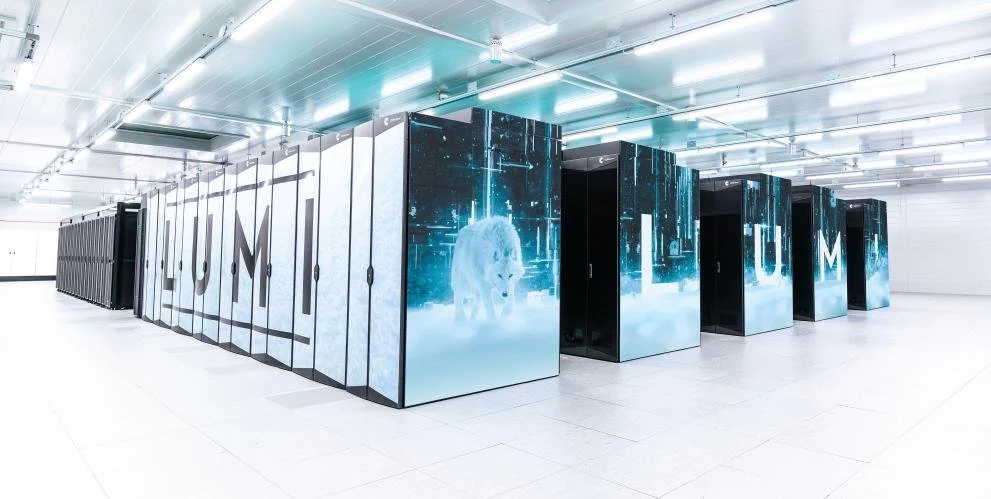
The EUROPA model will be developed as fully open-source and reproducible, designed to run on local servers at no ongoing licensing cost. Training is expected to leverage EuroHPC’s world-class supercomputers, with Sharka noting that the public network represents an underappreciated strategic asset. The model will prioritize performance across all 24 EU languages from the ground up—an ambitious differentiator in a field where English-centric training data often dominates.
According to Sharka, the team aims to release the fully open-source frontier model within a year. He has also signaled expectations of early government data-sharing agreements to strengthen training data quality while maintaining European control.
Voices from the Ecosystem
Industry and policy leaders have framed the selection in terms of both capability and values.
“Europe can lead in advanced AI on its own terms. EUROPA will build a frontier European AI model in all 24 EU languages, showing that we can match the best while staying true to our values. This is about strengthening Europe’s ability to shape AI’s future with openness, trust and strategic autonomy at its core.”
— Henna Virkkunen, Executive Vice-President for Tech Sovereignty, Security and Democracy, European Commission (June 19, 2026)
Sharka has emphasized pragmatism alongside ambition, highlighting Europe’s existing compute advantages for targeted frontier training versus the massive ongoing inference demands of consumer-facing US systems.
“While U.S. companies are spending heavily on AI infrastructure, Europe already has what it needs through the EuroHPC network… training a frontier model requires far less computing power than serving hundreds of millions of chatbot users remotely.”
— Uljan Sharka, CEO of Domyn (via Reuters, June 25, 2026)
These perspectives reflect a broader industry sentiment that sovereignty need not mean isolation. European players are increasingly viewing public infrastructure and regulatory clarity as competitive assets rather than constraints, particularly for enterprise and public-sector adoption where trust and compliance matter as much as raw benchmark scores.
The Supporting Cast: Chips, Research, and Global Context
EUROPA does not exist in isolation. Just days after the announcement, the Commission approved €76 million in German state aid for advanced semiconductor testing equipment, while the Industrial Alliance for Semiconductors met on June 26 to discuss implementation of Chips Act 2.0. Parallel efforts like the Resolve initiative—pooling 20 research and technology organizations across 18 countries to target 1,000-fold improvements in AI chip energy efficiency by 2032—address the hardware foundations.
The EU’s signing of the Pax Silica Declaration on June 25 further illustrates a dual-track approach: building domestic capacity while engaging like-minded partners on supply-chain security.
Together, these moves form a coherent, if ambitious, ecosystem strategy: sovereign models (EUROPA), sovereign infrastructure and chips (Chips Act 2.0 and EuroHPC), coordinated research (Resolve), and selective international alignment.
Persistent Hurdles
Success is far from guaranteed. Europe’s historical challenge has been translating world-class research into globally competitive companies and scaled deployment. Talent remains mobile, venture funding for deep-tech AI still trails US levels despite new instruments like the Scaleup Europe Fund, and energy constraints for large-scale training persist even with efficiency gains targeted by Resolve.
Critics note that open-source release, while philosophically aligned with European values, carries risks of model misuse or rapid capability diffusion without corresponding safety infrastructure. Moreover, a 400-billion-parameter model, while frontier-scale in 2026 terms, will face immediate competition from larger or more heavily optimized systems emerging elsewhere.
Data quality and diversity—especially for lower-resource EU languages—will require sustained institutional partnerships. And while EuroHPC provides a strong starting point, sustained access and expansion of European compute capacity remain essential for iteration beyond this single project.
What EUROPA Means for the Future
If delivered on schedule and at claimed performance, EUROPA could catalyze several shifts. First, it would provide European enterprises and public administrations with a high-capability, locally runnable alternative to foreign-hosted models, reducing exposure to potential access restrictions or geopolitical friction. Second, the multilingual-by-design approach could accelerate AI adoption in non-English-speaking regions and sectors, from public services to cultural heritage and specialized industry.
Third, the open-source nature may spur a broader European ecosystem of fine-tunes, agents, and applications built on a shared foundation—echoing how open models have accelerated innovation elsewhere. Fourth, it signals to global markets that Europe is serious about moving from regulation and research to frontier development, potentially attracting talent and capital.
Longer term, EUROPA fits into a vision of multipolar AI: not replacing US or Chinese leadership, but ensuring Europe retains agency in shaping how advanced AI is developed, governed, and deployed within its borders and values framework. Success here could embolden further “Apply AI” initiatives across sectors and strengthen the case for deeper integration of research, compute, and industrial policy.
The real test will come not at the model release but in the years of iteration, adoption, and ecosystem building that follow. Europe has placed a significant bet on its ability to combine public infrastructure, private ingenuity, and regulatory clarity into a distinctive AI advantage. EUROPA is the most visible expression yet of that bet.
Whether it becomes a landmark of European technological resurgence or another ambitious project that highlights persistent execution gaps will depend on the sustained political will, industrial follow-through, and technical delivery that now begin in earnest. In the fast-moving world of frontier AI, the next 12–24 months will reveal whether this particular rising star fulfills its continental promise.