
EU Inc: Von der Leyen's 2026 Plan to Boost European Tech Innovation and Startups
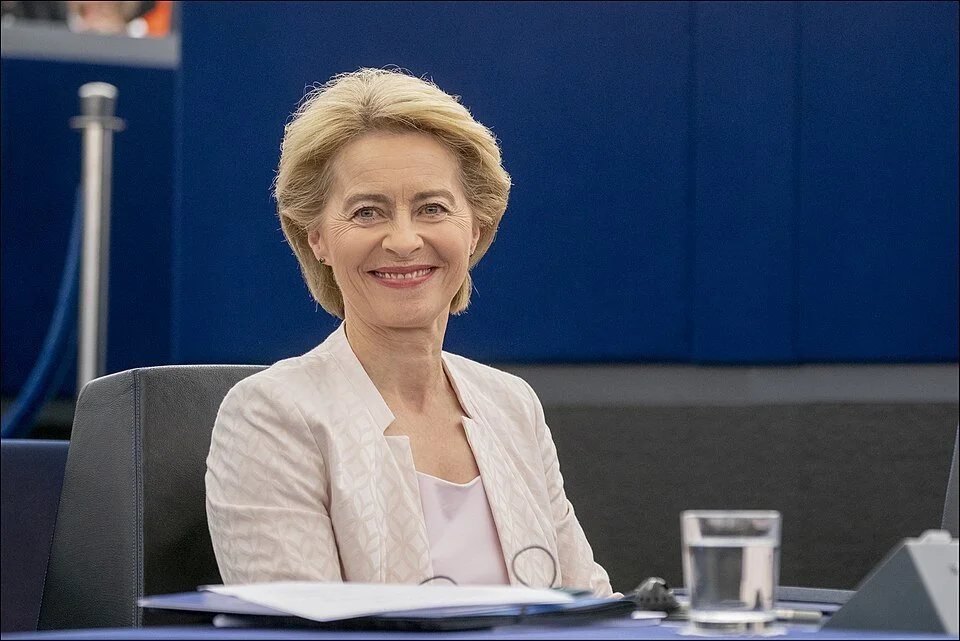
Photo: European Parliament
Key Points
Ursula von der Leyen's announcement of EU Inc. on January 20, 2026, at the World Economic Forum in Davos introduces a "28th regime"—a unified, pan-European company structure aimed at simplifying business operations across the EU's 27 member states. It seems likely to foster easier scaling for startups, potentially boosting Europe's tech sector by reducing administrative barriers.
Research suggests EU Inc. could enhance technology and innovation by enabling seamless cross-border fundraising and operations in a 450-million-person market, helping retain talent and companies that might otherwise relocate to the US or China. However, evidence leans toward potential challenges, such as implementation delays or dilutions that could limit its impact.
The initiative aligns with broader EU goals like the Savings and Investment Union and a focus on high-value sectors (e.g., AI and defense tech), but critics argue it risks adding complexity if not executed ambitiously, acknowledging the ongoing debate over EU regulatory burdens on innovation.
Overview of the Announcement
On January 20, 2026, European Commission President Ursula von der Leyen unveiled EU Inc. during her Davos address, framing it as a key step toward "permanent European independence" amid geopolitical shifts. Drawing parallels to the 1971 Nixon shock, she emphasized adapting to a fractured world by unifying Europe's fragmented single market. EU Inc. promises online company registration in 48 hours, a uniform capital regime, and barrier-free operations—modeled after efficient systems in the US (e.g., Delaware incorporations) or China. This "28th regime" coexists with national laws, allowing businesses to opt for EU-wide rules without altering taxes or employment regulations.
Potential Benefits for Tech and Innovation
EU Inc. addresses core pain points in Europe's tech ecosystem, where startups face high costs and regulatory silos when expanding. By creating a central registry and standardized documents, it could attract more venture capital, support deep-tech scaling, and position Europe competitively in AI, batteries, and defense technologies. For instance, Europe's defense-tech sector has seen three unicorns emerge since 2022, fueled by €800 billion in planned spending to 2030. Overall, it may help close the innovation gap with global rivals, though success depends on avoiding overregulation.
Challenges and Considerations
While optimistic, the proposal faces scrutiny: some stakeholders worry it could undermine worker protections or lead to uneven implementation if adopted as a directive rather than a regulation. Broader EU policies, like the AI Act, have been criticized for stifling innovation through compliance burdens. Diplomatic views highlight the need for balance—empowering startups without eroding social models—making EU Inc. a promising yet debated tool for tech growth.
In her address at the World Economic Forum in Davos on January 20, 2026, European Commission President Ursula von der Leyen unveiled the EU Inc. initiative, marking a bold stride toward unifying Europe's corporate landscape. This "28th regime," as it is formally known, proposes a pan-European legal entity designed to streamline business operations across the European Union's 27 member states, addressing longstanding fragmentation that has hampered growth and innovation. By enabling online company registration within 48 hours, establishing a uniform capital regime, and facilitating seamless cross-border activities, EU Inc. aims to empower startups and scaleups to thrive in a 450-million-consumer market—much like companies do in the unified environments of the United States or China. This announcement, embedded in von der Leyen's vision of "permanent European independence," comes at a time of geopolitical turbulence, including trade tensions and energy dependencies, underscoring the initiative's role in bolstering Europe's technological sovereignty and competitive edge.
The genesis of EU Inc. stems from years of advocacy by the startup community, notably through the EU-INC campaign—a grassroots effort led by founders, investors, and associations. The campaign highlighted how Europe's single market, while theoretically borderless for goods and services, remains riddled with national regulatory silos that inflate costs and deter expansion. For instance, a startup incorporated in one member state often faces cumbersome adaptations when entering another, from varying stock option rules to disparate investment documentation. Von der Leyen's speech echoed these concerns, noting that such barriers act as a "handbrake" on Europe's potential, driving innovative firms overseas—particularly to the US, where Delaware's flexible incorporation laws have long attracted global talent. EU Inc. seeks to counteract this exodus by creating a digital-first entity with features like a central EU-level registry, standardized investment tools, and harmonized stock options, all while preserving national autonomy in taxes and employment laws.
For European technology and innovation, the implications are profound and multifaceted. At its core, EU Inc. promises to dismantle the administrative hurdles that stifle scaling, enabling tech firms to access broader talent pools, markets, and capital without the friction of 27 distinct regimes. This is particularly crucial for deep-tech sectors, which require substantial, long-term investments and often struggle in Europe's fragmented venture capital landscape. As von der Leyen emphasized, Europe is already competitive in areas like batteries, chips, and aerospace, with companies adopting AI at rates comparable to US peers. The initiative aligns with complementary efforts, such as the Savings and Investment Union, which aims to build a deeper capital market for equity funding to SMEs and innovative industries. By fostering liquidity and attracting global investors, EU Inc. could help close the productivity gap, where US tech firms have surged 40% since 2005 while European counterparts stagnate.
Moreover, EU Inc. dovetails with von der Leyen's focus on high-value sectors like AI and defense technology. The EU's Affordable Energy Action Plan, for example, invests in interconnectors, renewables, and nuclear to lower prices and reduce volatility, essential for energy-intensive innovations such as AI factories and gigafactories. In defense tech, Europe has witnessed explosive growth: the sector's value has tripled since 2022, spawning unicorns in AI-powered drones and software, supported by €800 billion in projected spending to 2030. EU Inc. could amplify this by simplifying cross-border collaborations, retaining homegrown talent, and positioning Europe as a hub for dual-use technologies that bridge civilian and military applications. Reactions on platforms like X (formerly Twitter) reflect enthusiasm from the startup ecosystem, with posts hailing it as a "win" for founders and a step toward building "European champions."
Yet, the proposal is not without controversy. Critics argue that while EU Inc. addresses fragmentation, it risks diluting worker protections if companies can opt out of national labor laws, potentially pitting business efficiency against social safeguards. Labor unions and some MEPs warn of jeopardizing Europe's social model, emphasizing that harmonization should not undermine collective agreements or worker involvement. Broader EU regulatory frameworks, such as the AI Act, have faced backlash for imposing compliance costs (e.g., €29,277 annually per AI unit) that may hinder startups and concentrate innovation in large firms. Europe's R&D spending lags at 2.22% of GDP compared to the US's 3.59%, exacerbating an "innovation lethargy" driven by overregulation and risk-averse investments. Some X users expressed skepticism, viewing EU Inc. as potentially "more bureaucratic mess" or questioning its execution amid von der Leyen's centralized style.
The roadmap for EU Inc. outlines ambitious timelines: a legislative proposal in Q1 2026, adoption by 2027, and first companies launching that year. Success hinges on political negotiations in the European Council and Parliament, where dilutions—such as limiting it to "innovative" firms or opting for a directive over a regulation—could undermine its uniformity. Advocates stress the need for an open, single-standard system accessible to all companies, not just startups, to maximize benefits.
Conclusion
In conclusion, EU Inc. represents a transformative opportunity for European technology and innovation, potentially leveling the playing field with global powers by unleashing entrepreneurial potential. However, its realization demands ambitious implementation to navigate criticisms and deliver on von der Leyen's promise of a resilient, independent Europe. As geopolitical shocks persist, this initiative could redefine the continent's tech trajectory, fostering a renaissance in innovation while addressing debates over regulation and equity.