
The Munich Flip: How Old Money Could Build Europe’s Tech Future
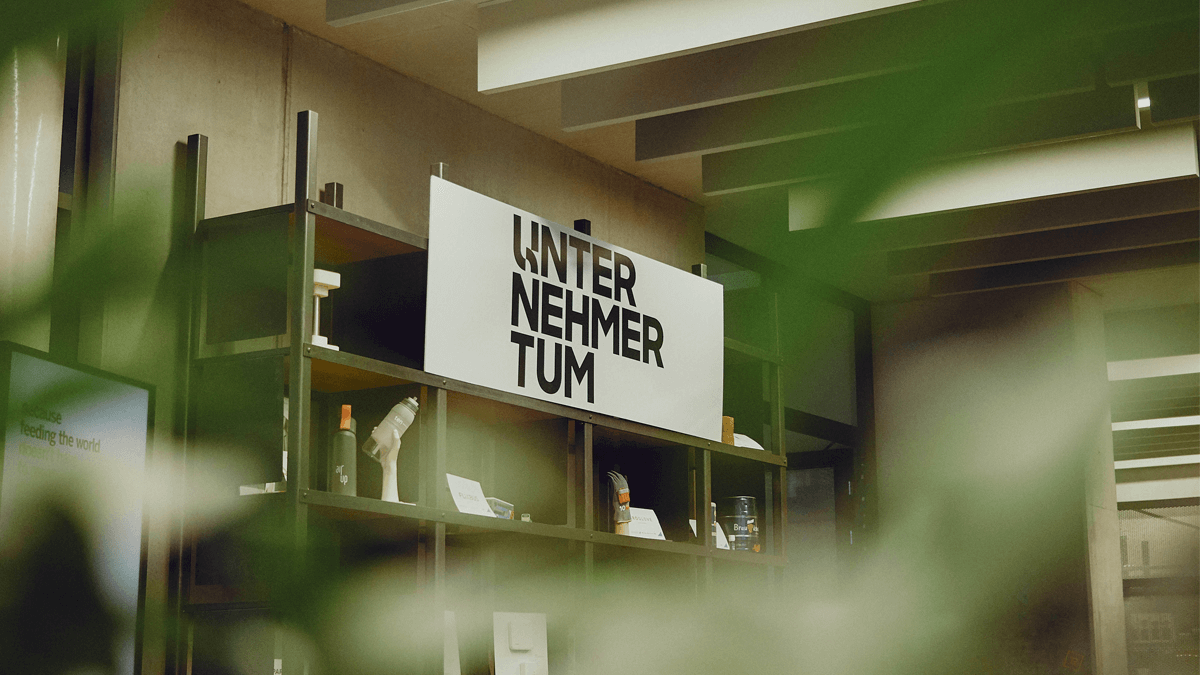
image: UnternehmerTUM
For the past decade, the narrative of European technology has been written in English and centered on Berlin and London. It was a story of "Blitzscaling," fueled by American venture capital, aiming to build consumer apps that could be sold on the NASDAQ. It was the era of the 10-minute grocery delivery, the neobank, and the pursuit of the "Unicorn" status above all else.
But in 2024, the script changed. While the headlines focused on the cooling of global venture markets, a shift occurred in the bedrock of the European economy. We call it "The Munich Flip." For the first time, the capital volume in Bavaria surpassed that of Berlin. This was the sign of fundamentally reoriented priorities which will continue to shape capital allocation for years to come.
The center of gravity in European tech has moved south, and the nature of the money has changed. The era of the "General Partner" (GP) chasing a 5x return in ten years is ending. The era of the "Industrial Family" fighting for its survival over the next fifty years has begun.
The Mittelstand Liquidity Event
To understand why this is happening, one must look at the existential anxiety gripping the German Mittelstand; the thousands of family-owned hidden champions that form the backbone of Europe’s largest economy.
For fifty years, these families operated on a simple model: make the world's best machinery, export it to China, and reinvest the profits into conservative bonds. But the "China Shock" has broken this machine. Chinese competitors are no longer just customers; they are rivals, often producing similar quality at a fraction of the cost. Combined with an energy crisis and a demographic collapse, the Mittelstand is facing a "adapt or die" moment.
The result is the "Mittelstand Liquidity Event." Families like the Quandts (BMW), the Viessmanns (Climate/Energy), and the Haniels (Industrial) are unlocking their balance sheets. We are speaking of an estimated €1–2 trillion in private wealth that is moving from passive preservation to active defense.
They are not buying yachts. They are executing a massive asset reallocation, pouring capital directly into deep tech ecosystems. They have realized that they cannot hire their way out of this crisis; they must buy the innovation that will secure their legacy. A family that makes combustion engine parts does not invest in an electric aerospace startup to get a quick exit; they invest to ensure they still have an industry to operate in 2040.
The Engine: UnternehmerTUM
Every revolution needs a headquarters. For the Munich Flip, that HQ is UnternehmerTUM.
Located at the Technical University of Munich (TUM), this is not a standard university incubator. It has evolved into a highly sophisticated "Venture Studio for the Mittelstand." It serves as the docking station where the liquidity of the Old Economy meets the capability of the New Economy.
The genius of the UnternehmerTUM model, and specifically its FamilienUnternehmerTUM initiative, is that it curates trust. It brings secretive industrial patriarchs into a room with robotics PhDs and space-tech engineers. It facilitates a cultural translation: the family provides the "Patient Capital" and the factory floor for testing; the startup provides the AI and the agility.
This creates a pipeline of "Industrial Tech" ventures that look very different from the typical Berlin SaaS startup. They are born on the factory floor, not in a coworking space. They are capital-intensive, hardware-focused, and designed to solve tangible physical problems.
The Death of the GP
Perhaps the most disruptive consequence of this shift is the disintermediation of the traditional Venture Capital industry; a trend we call "The Death of the GP."
For twenty years, European Family Offices were the "Limited Partners" (LPs) who quietly funded VC funds. They paid the "2 and 20" fees (2% management fee, 20% profit share) and hoped the VCs would pick winners. But structurally, European VCs have underperformed their US peers, often constrained by fund lifecycles that are too short for deep tech.
The Mittelstand has realized that the 10-year fund model is fundamentally broken for industrial innovation. You cannot build a nuclear fusion reactor or a sovereign satellite constellation on a timeline dictated by a VC’s need to fundraise for Fund III.
So, the families are cutting out the middleman. We are seeing a surge in "Direct Investment" units. Family Offices are hiring ex-VC partners internally to run their own deal teams. They are deploying capital directly onto the cap tables of startups.
This capital is dangerous to compete with. It has no expiration date. It does not need to sell the company in a fire sale during a recession. It seeks "Strategic Monopolies"—dominance in a niche vertical—rather than "Hypergrowth." When a Munich robotics startup raises a Series B led by a family consortium, they gain more than just cash; they gain a board member who measures success in decades, not quarters.
The Government Synergy: The Relay Race
This flood of private industrial capital provides the missing link in European policy: the "Scale-Up" solution.
For years, Europe has been excellent at funding "Inception" (university research, seed grants) but terrible at funding "Expansion" (building the first factory). VCs simply don't have the stomach for the CapEx required to build hardware.
The new model operates like a relay race:
Leg 1 (The Risk Taker): Government initiatives, such as the European Tech Champions Initiative (ETCI) or Germany’s SPRIND, fund the high-risk R&D phase. They de-risk the technology when it is just a blueprint.
Leg 2 (The Industrializer): Once the tech works but needs €100 million to industrialize, the Mittelstand steps in. They are comfortable with high CapEx because they understand assets.
This synergy allows Europe to stop trying to copy Silicon Valley (which runs on software margins) and start playing to its own strengths: high-end manufacturing and complex engineering.
The Rise of "Safe Haven" Assets
This capital flow is already reshaping the public markets. We are seeing the birth of a new asset class: "Industrial Tech."
Investors are fleeing the volatility of pure software and seeking safety in tangible sovereignty. This explains the explosive success of recent IPOs like Renk Group (defense propulsion) and Exosens (sensors). These companies were marketed not as "tech" plays, but as "Growth Industrials."
They represent the perfect Munich Flip asset: high intellectual property, deep moats, and critical relevance to national security. The Mittelstand loves them because they understand the product. The government loves them because they secure European autonomy. The market loves them because they are profitable.
Berlin as the Transaction Engine
This shift does not spell decline for Berlin; rather, it forces a necessary specialization. As Munich claims the physical world of "Atoms," Berlin is solidifying its fortress in the world of "Bits." The capital remains the undisputed hub for Fintech and pure software, but its mandate is evolving.
While Munich builds the machines, Berlin builds the financial operating system that allows Europe to pay for them. We are seeing a new wave of "CFO Stack" and B2B Fintech companies emerging from Berlin; riding the AI wave not to generate text, but to automate the complex compliance, payroll, and transaction layers of the continent. The "Munich Flip" clarifies the division of labor: Munich attracts the Patient Capital needed to bend physics, while Berlin retains the Growth Capital needed to scale software.
Germany is effectively becoming a dual-engine economy: one city to build the industrial assets, and another to securitize, insure, and trade them.
The Future is Grey
The "Munich Flip" suggests that the next Golden Age of European tech will not be colorful. It will not be about bright consumer apps or gamified fintech. It will be "Grey Tech"; steel, aluminum, silicon, and carbon fiber.
It will be driven by Munich, funded by the quiet trillions of the German industrial dynasties, and structured to last for generations. The flashy "Unicorn" hunting of the 2010s is over. The 2020s are about the re-industrialization of the continent, and for the first time in a long time, the money is moving to the right place to make it happen.