
Berlin's Quiet Bet on Financial Wellbeing
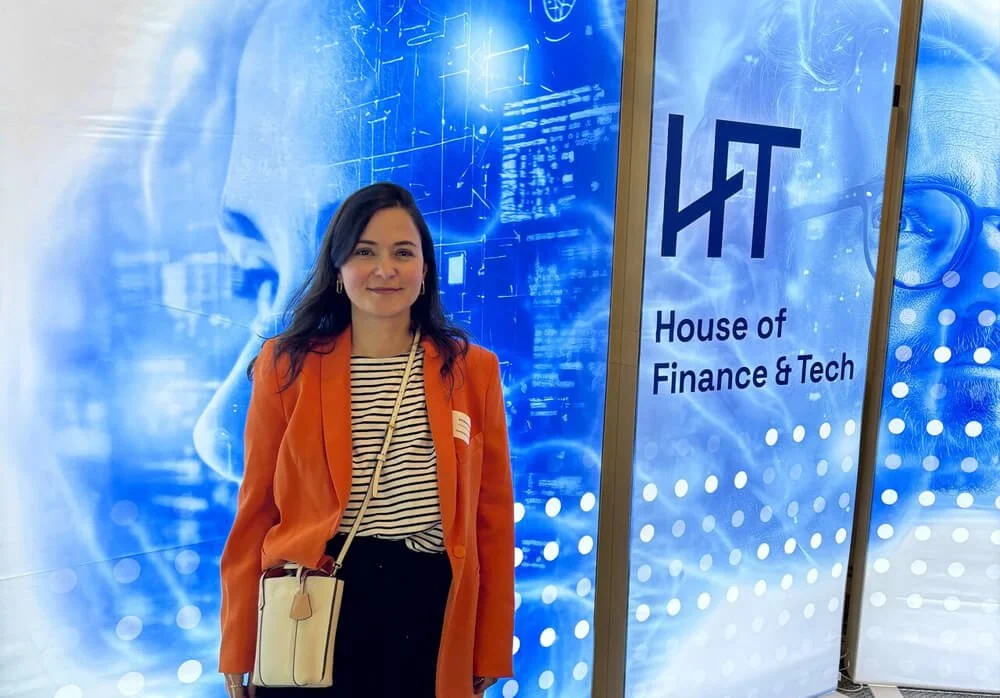
"Our mission at the House of Finance & Tech Berlin (HoFT.Berlin) is to establish Berlin as a leading financial wellbeing hub through innovation and collaboration."
- Dr. Sebastian Schäfer, CEO of HoFT Berlin
In April 2024, a new kind of institution opened its doors in Berlin's Kreuzberg district. The House of Finance and Tech, known as HoFT, is not a bank, a startup accelerator, or a government agency. It is, in a sense, all three at once, and it represents an increasingly popular European approach to building financial technology ecosystems: the coordinated, public-private hub.
The idea is straightforward enough. Berlin is already home to more than 160 fintech companies, roughly a third of all German fintechs, including major names like N26, Solaris, and Qonto. In 2023 alone, over €343 million in venture capital flowed to Berlin-based fintech startups, making the city a leader in European fintech funding. What has been missing, according to HoFT's backers, is connective tissue. Startups operate in isolation from regulators. Banks and fintechs rarely share a room, let alone a strategy. Policymakers set rules without enough contact with the people building products. HoFT is designed to close those gaps.
How It Came Together
The project's origins trace back to late 2022, when Schalast Law Firm delivered an implementation concept that included a business plan and an analysis of what a fintech hub in Berlin would actually need. The effort was a collaboration between Berlin Partner für Wirtschaft und Technologie, the Berlin Finance Initiative, the Senate Department for Economics, Energy and Public Enterprises, and Investitionsbank Berlin. Crucially, the initiative operates within Germany's Digital Hub Initiative under the Federal Ministry for Economic Affairs and Climate Protection, giving it a federal framework while remaining rooted in Berlin's particular strengths.
The formal founding of HoFT's support association took place on April 23, 2024. Its founding members read like a cross-section of the city's financial community: Deutsche Bank and Berliner Volksbank alongside digital challengers like N26, Qonto, and Solaris, plus institutions like the IHK Berlin and the East German Banking Association. On September 1, Dr. Sebastian Schäfer, a behavioral economist who previously built the TechQuartier innovation hub in Frankfurt, took over as Managing Director. The physical headquarters were established at the Spielfeld Digital Hub on Skalitzer Straße, with plans to eventually develop a decentralized campus across multiple Berlin neighborhoods.
The Financial Wellbeing Thesis
“What makes HoFT particularly interesting is its focus on the Financial Wellbeing ecosystem. The initiative aims to connect stakeholders around a shared goal: improving financial literacy, access, and innovation while supporting fintech scale-ups with expertise in areas such as regulation, funding, sales, and international expansion.”
- Sebnem Elif Kocaoğlu Ulbrich, Founder & MD of Contextual Solutions
What distinguishes HoFT from the many innovation hubs that have cropped up across European cities in recent years is its central organizing thesis: financial wellbeing. This is not just a branding choice. The concept, as HoFT deploys it, is a deliberate attempt to reframe what financial technology is for. Rather than treating fintech as a sector defined by payments infrastructure, lending platforms, or trading apps, HoFT argues that the purpose of all these tools should be measured by whether they help people gain control over their financial lives.
The numbers underlying this argument are sobering. According to data presented at HoFT's FinWell Summit in December 2025, 52 percent of Germans experience financial worry at least once a week, 27 percent have no meaningful overview of their own finances or plans for the future, and 48 percent believe they are likely to face a decline in their standard of living in retirement. Only about half of all employees covered by mandatory social insurance in Germany have an active workplace pension.
HoFT is working with partners including Roland Berger to develop a Financial Wellbeing Score, a data-driven metric intended to make this problem measurable at both the individual and institutional level. The ambition is to shift financial institutions from transactional service providers toward something more like holistic wellbeing partners. It is an optimistic vision, and whether it gains real traction will depend on whether traditional banks and insurers find it compelling enough to act on.
What HoFT Actually Does
In practice, HoFT operates along several tracks. It maintains a knowledge database and quality management programs for its member community. It offers a "one-stop-shop" for navigating public authorities, a common pain point for fintechs dealing with German regulatory complexity. It hosts networking events and provides physical meeting space.
“The Scale-Up Academy represents our commitment to empowering and supporting fintechs that drive financial wellbeing and are the source of innovation in financial services.”
- Anna Tsukerman, Investment Director and Scale-Up Academy Lead at HoFT Berlin
Perhaps its most concrete program is the Scale-Up Academy, led by investment director Anna Tsukerman. The Academy targets later-stage fintechs that have moved past the initial startup phase but face the well-documented challenges of scaling in Europe: regulatory compliance across multiple jurisdictions, leadership development, and the persistent gap in growth-stage funding. As Schäfer noted in an interview with why.berlin, late-stage funding in Europe saw a 57 percent year-over-year decline in 2024, falling to just $4.2 billion across more than 70 rounds. That funding gap makes support infrastructure for scale-ups not a luxury but a survival necessity.
HoFT is also investing in international partnerships. In November 2024, Schäfer and his team attended the Singapore FinTech Festival to promote cross-border collaboration on financial wellbeing. More recently, the Global Finance and Technology Network, a nonprofit established by the Monetary Authority of Singapore, chose Berlin as the site for its first European office in April 2025, hosting its launch event in collaboration with HoFT. These moves suggest that HoFT is beginning to function as the kind of gateway institution its founders envisioned, connecting Berlin's ecosystem to global networks.
The Transition Ahead
HoFT's early life was cushioned by public funding from the Berlin state budget, but that institutional support was always designed to be temporary. As of January 1, 2026, the organization transitioned to a model sustained by its support association and its own commercial offerings. This is the critical inflection point for any publicly seeded innovation hub: can it generate enough value for its members to survive on its own?
The early signals are cautiously encouraging. The FinWell Summit is returning for a second edition in December 2026, and HoFT's calendar for 2025 and 2026 is packed with programming, including a delegation bringing ten Berlin fintechs to London in April 2026 and continued development of the Financial Health Index, which tracks workforce productivity and financial stress. Founding members from across the banking and fintech spectrum remain engaged.
Still, the broader European fintech environment presents headwinds. Venture capital has not recovered to the peaks of 2021 and 2022. Regulatory complexity across EU member states remains a barrier to scaling. And the promise of "financial wellbeing" as an organizing principle, while intellectually appealing, still needs to demonstrate that it can drive commercial outcomes for the institutions being asked to invest in it.
A Model Worth Watching
What makes HoFT worth paying attention to is less any single program or partnership than the underlying model it represents. Across Europe, governments and industry groups are experimenting with structured, publicly backed ecosystems designed to accelerate specific sectors. Berlin's fintech hub is a test case for whether this approach can produce results that organic market activity alone cannot.
The next two years will be telling. If HoFT can sustain itself financially while deepening its research on financial wellbeing and expanding the Scale-Up Academy, it may offer a template for other European cities seeking to build durable innovation infrastructure. If it cannot, it will join a long list of well-intentioned hubs that generated press releases and panel discussions but little lasting change.
For now, HoFT occupies an interesting position: ambitious enough to claim it wants to make Berlin Europe's financial wellbeing capital, pragmatic enough to know that the real work is in the details of regulation, funding, and cross-border collaboration. In a sector prone to hyperbole, that combination of ambition and restraint is itself worth noting.