
Washington Tries to Rewire the Plumbing of American Finance
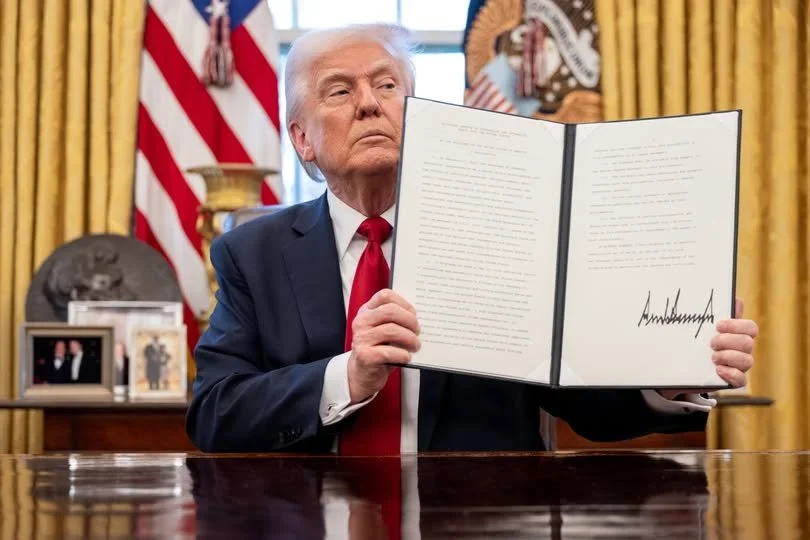
On May 19, President Trump signed a new executive order, titled "Integrating Financial Technology Innovation into Regulatory Frameworks." Designated Executive Order 14405, it isone of the more consequential financial-policy documents of the year. In a few thousand words, the administration instructed nearly every federal financial regulator to go looking for the rules that keep technology companies out of the banking system, and to start taking them apart.
The order does not, by itself, change any existing regulation. Instead, it sets deadlines, commissions reviews, and signals intent for the future. Yet for an industry that has spent fifteen years trying to wedge itself between consumers and the banks that serve them, that signal is important. It tells fintech founders, crypto executives, and the lawyers who advise them that the regulatory weather in the United States has shifted decisively in their favor.
What the Order Actually Requires
Within 90 days, the Consumer Financial Protection Bureau, the SEC, the CFTC, the FDIC, the OCC, and the National Credit Union Administration must review their existing regulations, guidance, supervisory practices, and licensing processes. They are looking for anything that impedes fintech firms from partnering with regulated banks, or that slows applications for bank charters and deposit insurance. Within 180 days, they are expected to act on what they find.
The order defines "fintech firm" expansively, covering any non-bank that uses technology to offer financial products, including payment processing, lending, digital assets, and blockchain services. That breadth is the point. The policy premise, stated plainly in the text, is that fragmented and burdensome rules form barriers to entry that mostly protect incumbents. The remedy is to fold these newer players into the regulatory perimeter rather than leaving them to operate around its edges.
This continues a year of executive action that has steadily repositioned Washington toward digital finance. Executive Order 14178, signed in January 2025, set policy favoring banking access for digital-asset firms and barred a U.S. central bank digital currency. The GENIUS Act, passed in July 2025, created the first federal regime for payment stablecoins, with an OCC-administered licensing path for non-bank issuers. The May order extends that arc into the heart of the payments system.
The Federal Reserve's Quiet Companion Move
The most closely watched provision asks the Federal Reserve, which the order pointedly does not classify as a covered regulator, to evaluate who gets access to its payment accounts and services. Today that access is the privilege of chartered banks. The order asks the Fed to consider extending it to uninsured depository institutions, certain non-bank financial companies, and direct participants in instant-payment networks, and to report back within 120 days.
One day after the order, the Fed proposed a limited-purpose "Payment Account" that eligible institutions could use to clear and settle transactions. The account would grant direct access to Fedwire, the FedNow instant-payment service, and the National Settlement Service, while withholding the riskier privileges of bank membership: no discount-window borrowing, no intraday credit, no interest on balances, and no access to FedACH. It is a narrow door rather than an open one, and it follows years of debate over the "skinny" master account that Fed Governor Christopher Waller first floated as a compromise for fintechs. The public comment period runs through late July.
Industry Hears Validation
The reception split along predictable lines, with trade groups treating the order as overdue recognition. The Financial Technology Association called it a practical win for the people who already live inside digital finance.
"This executive order is a win for the millions of Americans who rely on fintech products every day to pay bills, manage their money, and access financial services. The U.S. has long been home to the most innovative financial companies in the world. This order helps ensure that those innovations actually reach the people who need them most, including those left behind by traditional institutions."
— Penny Lee, President and CEO, Financial Technology Association
The American Fintech Council framed the moment around regulatory philosophy, arguing that supervision should be calibrated to risk rather than to the age of the institution.
"A modern, risk-based approach to regulation is essential for protecting consumers while promoting economic opportunity. AFC looks forward to continuing our work with federal financial regulators as they conduct their reviews and implement this executive order to ensure a more transparent, protected, and innovative financial system for all Americans."
Even the American Bankers Association, which has long urged restraint on opening the Fed's rails, offered conditional support, asking that regulators pursue innovation without compromising the safety of the existing system. The caution was notable coming from incumbents who stand to lose the most ground.
The Consumer-Protection Counterargument
The sharpest opposition came from consumer advocates, who read the same text and saw a green light for practices courts and states have spent years trying to curb. The National Consumer Law Center warned that easier bank partnerships would revive "rent-a-bank" arrangements, in which a non-bank lender routes high-cost loans through a chartered partner to claim federal preemption from state interest-rate caps.
"This order is an assault on consumers and on federal and state laws that protect people from high-cost loans and other risky products. Today, every predatory lender calls itself a 'fintech.' This order promotes rent-a-bank schemes and allows predatory lenders to become national banks that offer 100%-plus APR loans nationwide, despite laws prohibiting them in 45 states."
— Lauren Saunders, Senior Attorney, National Consumer Law Center
The timing sharpens the concern. The order lands while the administration weighs national bank charter applications from lenders such as Enova and OppFi, whose products can carry rates between 100 and 300 percent. A faster, friendlier chartering process is precisely what those firms want, and precisely what advocates fear. The dispute over who counts as the "true lender" in a fintech-bank partnership, already litigated in California and elsewhere, will only intensify if the order's reviews loosen the rules around those tie-ups.
The View From Europe
For European fintech leaders, the order is less an immediate threat than a signal worth studying. Europe has spent the past two years building out MiCA, its comprehensive crypto-asset licensing regime, whose transitional period ends on July 1. The approach is harmonized and protective, and its costs are real: more than 18 percent of European crypto platforms have reportedly exited or shut down rather than absorb the compliance burden.
The contrast with Washington is now hard to miss. A European Parliament study this year noted persistent gaps between the two regimes on licensing portability, central bank digital currencies, and regulatory consistency, even as both bring stablecoins inside the perimeter. American regulators are now being told to remove friction; European ones are still adding it. That divergence creates room for regulatory arbitrage, and it puts quiet pressure on Brussels to defend its competitiveness without abandoning its safeguards. Firms operating on both sides of the Atlantic will be recalculating where to charter, where to raise capital, and where to launch first.
What to Watch
The order's force depends entirely on execution. The agency reviews are due in August, the Fed's report in September, and the Payment Account comment period closes in July. An incoming Fed chair, Kevin Warsh, is unlikely to ignore the directive, which suggests the central bank's posture could shift further. None of this is law yet, and the order explicitly creates no enforceable rights. What it creates instead is momentum, and in financial regulation momentum has a way of hardening into rules.